Talk about disruptive technology, you should take a look at the innovation from Jeff Han. Mind bogling.
I cannot stop watching the third one - particularly the one where his friend reads Wikipedia. The computer hardware companies will have a very hard time adjusting their operations to this innovation. Software companies will have refine their UI and usability principles. As Jeff says, this technology is not new, but just their application and interface is new.
And so a new generation of computer engineers will be born. We will one day say to our kids, "In our times, there used to be small accesories called mouse and keyboard.". "Mouse? Why would you name such an electronic device as mouse? More than that, why would you need to seperate that control from the screen where the objects are shown?" "Why in the hell would you need a physical keyboard? Would it get stuck and wear?" Hmm... I cannot find a reply to these questions from my future kids.
Saturday, February 03, 2007


Thursday, January 25, 2007
More SBS questions?
I got a few more questions today. If you have any questions, please feel free to send me an email at Sampath.Narayanan@gmail.com and I'll help you as much as I can.
Regarding the placement, a few of my friends who came directly from India had this wrong notion. Seems like our anonymous friend also had this wrong impression that B Schools will arrange for a campus placement since they invest so much.
Myth #1: Companies pick 10s and 20s of people.
Reality: For starters, it is very different from the way our software companies wait in Engg colleges to pick 30s and 40s of candidates. Here (US/UK) the placement is very selected - many of my friends went through 8-10 interviews and still have a long way to go - There are multiple rounds with Dir, VP, MD, etc. and a variety of interviews.
Myth #2: I got into a top school. I will get to buy a Ferrari when I graduate.
Reality: By getting into the top B school, I would say you have got into trouble. This is the first step of 99 more steps that you have to cover before you reach the Ferrari-dom. I am not discouraging folks, but want to make sure that road doesn't end when you get an offer from Oxford.
Myth #3: The campus placement comittee will get jobs for all.
Reality: Campus placement center will arrange for companies to come and present in the campus. They brand the school and relentlessly look to support the candiate (sector consultants, et al). Almost NO companies accept resume or conduct interviews in campus. The companies come, present their company and requirement, you can ask questions and thats it. After that you apply thru their website along with the 100s outside your school. Most often companies select people just for the Oxford brand name and call for interview. It is upto the candidates to make or break the case from thereon.
I hope this clarifies some of the doubts of propsects atleast. These are just my thoughts and I, as you can guess, do not get paid for raising the Oxford brand.
---------
Kill me, kill me.. I have to write so many assignments and here I am, writing this blog... I should really reduce the blog time. Its bye for a week I guess.
Regarding the placement, a few of my friends who came directly from India had this wrong notion. Seems like our anonymous friend also had this wrong impression that B Schools will arrange for a campus placement since they invest so much.
Myth #1: Companies pick 10s and 20s of people.
Reality: For starters, it is very different from the way our software companies wait in Engg colleges to pick 30s and 40s of candidates. Here (US/UK) the placement is very selected - many of my friends went through 8-10 interviews and still have a long way to go - There are multiple rounds with Dir, VP, MD, etc. and a variety of interviews.
Myth #2: I got into a top school. I will get to buy a Ferrari when I graduate.
Reality: By getting into the top B school, I would say you have got into trouble. This is the first step of 99 more steps that you have to cover before you reach the Ferrari-dom. I am not discouraging folks, but want to make sure that road doesn't end when you get an offer from Oxford.
Myth #3: The campus placement comittee will get jobs for all.
Reality: Campus placement center will arrange for companies to come and present in the campus. They brand the school and relentlessly look to support the candiate (sector consultants, et al). Almost NO companies accept resume or conduct interviews in campus. The companies come, present their company and requirement, you can ask questions and thats it. After that you apply thru their website along with the 100s outside your school. Most often companies select people just for the Oxford brand name and call for interview. It is upto the candidates to make or break the case from thereon.
I hope this clarifies some of the doubts of propsects atleast. These are just my thoughts and I, as you can guess, do not get paid for raising the Oxford brand.
---------
Kill me, kill me.. I have to write so many assignments and here I am, writing this blog... I should really reduce the blog time. Its bye for a week I guess.
Wednesday, January 24, 2007
Martil Sorrell, CEO of WPP
There is a guy called Sir Martin Sorrell. And why am I telling you about him? Well, he was here at Oxford yesterday to give a speech, and a good speech it was.
Who is Sir Martin Sorrell?
He is Chief executive of WPP, one of the world's largest communications services groups. More on him below:
http://en.wikipedia.org/wiki/Martin_Sorrell
http://www.time.com/time/subscriber/2005/time100/builders/100sorrell.html
http://www.thehindubusinessline.com/catalyst/2005/12/08/stories/2005120800200100.htm
And why is he special?
Starting as wire basket (?!) company, the company is now one the largest communications (?!)group... the man is all about all M&A... Just see the list of companies here, and you should have you mouth open..
From Time - "Advertising legend David Ogilvy didn't mince words, so when Martin Sorrell's WPP, a London-based former manufacturer of wire baskets, launched a hostile takeover of Ogilvy & Mather in 1989, Ogilvy denounced CEO Sorrell as an "odious little jerk."
How was the speech?
http://www.science-enterprise.ox.ac.uk/html/activities_event_details.asp?eventid=221
Well, the topic was "Why making money is about a lot more than making money?".. Now why wouldn't I attend this lecture? The room was overflowing; somehow everyone does the same research that I do...hmmm. The speech was fast and breezy; the room was at pin-drop silence all along.
He talked about everything, from Media wars in China to Indian IT companies to growing markets in India/China. He also covered the nowadays-most-famous topic - Corporate Social Responsibility. Not surprisingly, the MBA folks had tons of questions; if not for the facilitator's intervention, he would have gone for long. A great guy to listen to anyday.
I learnt somewhere that he paid quite a lot of money (nearly $54m) for his divorced wife as alimony. Hmm, I hope my would-be wife is so rich.. ;) not that I will divorce for money ;))
Who is Sir Martin Sorrell?
He is Chief executive of WPP, one of the world's largest communications services groups. More on him below:
http://en.wikipedia.org/wiki/Martin_Sorrell
http://www.time.com/time/subscriber/2005/time100/builders/100sorrell.html
http://www.thehindubusinessline.com/catalyst/2005/12/08/stories/2005120800200100.htm
And why is he special?
Starting as wire basket (?!) company, the company is now one the largest communications (?!)group... the man is all about all M&A... Just see the list of companies here, and you should have you mouth open..
From Time - "Advertising legend David Ogilvy didn't mince words, so when Martin Sorrell's WPP, a London-based former manufacturer of wire baskets, launched a hostile takeover of Ogilvy & Mather in 1989, Ogilvy denounced CEO Sorrell as an "odious little jerk."
How was the speech?
http://www.science-enterprise.ox.ac.uk/html/activities_event_details.asp?eventid=221
Well, the topic was "Why making money is about a lot more than making money?".. Now why wouldn't I attend this lecture? The room was overflowing; somehow everyone does the same research that I do...hmmm. The speech was fast and breezy; the room was at pin-drop silence all along.
He talked about everything, from Media wars in China to Indian IT companies to growing markets in India/China. He also covered the nowadays-most-famous topic - Corporate Social Responsibility. Not surprisingly, the MBA folks had tons of questions; if not for the facilitator's intervention, he would have gone for long. A great guy to listen to anyday.
I learnt somewhere that he paid quite a lot of money (nearly $54m) for his divorced wife as alimony. Hmm, I hope my would-be wife is so rich.. ;) not that I will divorce for money ;))
How is Oxford SBS?
Well, someone anonymously left a comment requesting for more info on Oxford SBS..
"Sam How is placement so far from the last SBS batch?I am very interested in knowing how indians faired so far?What is your opinion of classes so far? Style/content/etc.Mind posting a response?"
I wish they had introduced themselves... anyways, here goes.
Placement for SBS: the last year SBS batch results aren't out yet... mostly to accomodate people who took the 15-month (they finished in Dec, 2006/Jan 2007).. From what I know personally the placement has been very good. Still SBS is focussed on Finance and Entrepreneurship as its focus.. Consultancy and High tech follows in placement counts... every year, we hear of someone starting their new company (I met someone in india who started an energy conversion company).. many folks here are sponsored by their company too, so they go back to their respective companies.. Overall: Trend is good.
Classes: Diversity and intellectual discussions are plus points. There are a few world class lecturers.. Moreover the admin is trying relentlessly to learn and excel; I read somewhere the dean saying that SBS will try to compete with HBS... good to aim high, huh? The number of Indians this year was a tad high; nevertheless, it was diff countries (like US citizens, UK citizens, singapore indians, etc.).. with 1B+ population, Indians and chinese are everywhere anyways ;)
Style/Content: I would say 60% of classes are taught in case basis.. the exam model is still the medieval Oxford way (with Sub fusc and double corrections)... we are now in the second term and we have to read atleast 2 cases and 2 reading material a day before going to the class... its a lot of work, but you've to do it, otherwise you will be the only one blinking in the class. Notable mention is the number of electives - 30+ electives to choose from (we have to choose 6).. ranges from private equity to real estate to networked media.. By networked media, I mean the blogs, wikis and facebooks - how cool is that to read abt a trend that has just emerged.. however I did not elect to that topic since I had strategy preferences...
Well, I hope that clarifies. I hope it was a MBA prospoect who was willing to learn more - All the best!
"Sam How is placement so far from the last SBS batch?I am very interested in knowing how indians faired so far?What is your opinion of classes so far? Style/content/etc.Mind posting a response?"
I wish they had introduced themselves... anyways, here goes.
Placement for SBS: the last year SBS batch results aren't out yet... mostly to accomodate people who took the 15-month (they finished in Dec, 2006/Jan 2007).. From what I know personally the placement has been very good. Still SBS is focussed on Finance and Entrepreneurship as its focus.. Consultancy and High tech follows in placement counts... every year, we hear of someone starting their new company (I met someone in india who started an energy conversion company).. many folks here are sponsored by their company too, so they go back to their respective companies.. Overall: Trend is good.
Classes: Diversity and intellectual discussions are plus points. There are a few world class lecturers.. Moreover the admin is trying relentlessly to learn and excel; I read somewhere the dean saying that SBS will try to compete with HBS... good to aim high, huh? The number of Indians this year was a tad high; nevertheless, it was diff countries (like US citizens, UK citizens, singapore indians, etc.).. with 1B+ population, Indians and chinese are everywhere anyways ;)
Style/Content: I would say 60% of classes are taught in case basis.. the exam model is still the medieval Oxford way (with Sub fusc and double corrections)... we are now in the second term and we have to read atleast 2 cases and 2 reading material a day before going to the class... its a lot of work, but you've to do it, otherwise you will be the only one blinking in the class. Notable mention is the number of electives - 30+ electives to choose from (we have to choose 6).. ranges from private equity to real estate to networked media.. By networked media, I mean the blogs, wikis and facebooks - how cool is that to read abt a trend that has just emerged.. however I did not elect to that topic since I had strategy preferences...
Well, I hope that clarifies. I hope it was a MBA prospoect who was willing to learn more - All the best!
Tuesday, January 16, 2007
A few software terms
As a Engagement manager, I have used the below terms quite frequently, but not being a core techie, I had not known the clear text book definition ;). Here they are (thanks to wikipedia):
Enterprise Resource Planning systems (ERPs) integrate (or attempt to integrate) all data and processes of an organization into a unified system. A typical ERP system will use multiple components of computer software and hardware to achieve the integration. A key ingredient of most ERP systems is the use of a unified database to store data for the various system modules.
Service-oriented architecture (SOA) [pronounced "sō-uh" or "es-ō-ā"] expresses a perspective of software architecture that defines the use of loosely coupled software services to support the requirements of the business processes and software users. Resources on a network[1] in an SOA environment are made available as independent services that can be accessed without knowledge of their underlying platform implementation.[1]
Enterprise Application Integration (EAI) is defined as the uses of software and computer systems architectural principles to integrate a set of enterprise computer applications.
Three-tier is a client-server architecture in which the user interface, functional process logic ("business rules"), data storage and data access are developed and maintained as independent modules, most often on separate platforms.
Distributed computing is a method of computer processing in which different parts of a program run simultaneously on two or more computers that are communicating with each other over a network. Distributed computing is a type of parallel processing. But the latter term is most commonly used to refer to processing in which different parts of a program run simultaneously on two or more processors that are part of the same computer.
Web service[1] is a software system designed to support interoperable machine-to-machine interaction over a network. Web services are frequently just application programming interfaces (API) that can be accessed over a network, such as the Internet, and executed on a remote system hosting the requested services.
Enterprise Resource Planning systems (ERPs) integrate (or attempt to integrate) all data and processes of an organization into a unified system. A typical ERP system will use multiple components of computer software and hardware to achieve the integration. A key ingredient of most ERP systems is the use of a unified database to store data for the various system modules.
Service-oriented architecture (SOA) [pronounced "sō-uh" or "es-ō-ā"] expresses a perspective of software architecture that defines the use of loosely coupled software services to support the requirements of the business processes and software users. Resources on a network[1] in an SOA environment are made available as independent services that can be accessed without knowledge of their underlying platform implementation.[1]
Enterprise Application Integration (EAI) is defined as the uses of software and computer systems architectural principles to integrate a set of enterprise computer applications.
Three-tier is a client-server architecture in which the user interface, functional process logic ("business rules"), data storage and data access are developed and maintained as independent modules, most often on separate platforms.
Distributed computing is a method of computer processing in which different parts of a program run simultaneously on two or more computers that are communicating with each other over a network. Distributed computing is a type of parallel processing. But the latter term is most commonly used to refer to processing in which different parts of a program run simultaneously on two or more processors that are part of the same computer.
Web service[1] is a software system designed to support interoperable machine-to-machine interaction over a network. Web services are frequently just application programming interfaces (API) that can be accessed over a network, such as the Internet, and executed on a remote system hosting the requested services.
Sunday, January 07, 2007
Impressionism and Pointillism
I am sure that title would have had you puzzled. Well, these are painting techniques.
I used to be a small-time painter during my school days. There was a next door girl (6 years older J) who used to my Guru. Mostly I imitated her and other’s paintings. I had to fight with my parents to buy different types of brushes; I saw oil paint only when she gifted to me her set when they left town. I remember some drawings still – some rajastani traditional women, goddess Lakshmi with a tilted head ;) et al. But given the nomads we were (my dad worked in Tamil Nadu government), we lost all the 20 some drawings in transfer between homes. Then came the 10th standard which dropped a full stop to all my creative activities.
Why do I suddenly remember this?
Hmmm… I was off to London last week to visit the Cognizant London office and the Country manager. I had a quick presentation/discussion with him for an hour in the morning, after which I had the day to spend in London before I returned to Oxford. I was roaming around and stumbled upon the National art gallery near Leicester Square, Central London.
I was very happy I visited this place. It had hundreds of art works (I mean, real art works, not miniatures/replicas) arranged in sections 1500-1600, 1600-1700, etc. I had known and appreciated modern artists (1900+). When I visited this section it was a real learning experience, you could really appreciate these artists, their thought process and their painting techniques only when you see the picture so near.
Impressionism
Impressionism was a 19th century art movement that began as a loose association of Paris-based artists. In impressionism, short, thick strokes of paint are used to quickly capture the essence of the subject, rather than its details. Rather than drawing it all, it gives an “impression” to the viewer.
You could see the difference in the pictures below. The first one (Art name: WishtleJacket) is a conventional painting and the second (Artist: Edgar) is painted using impressionist technique.


I used to be a small-time painter during my school days. There was a next door girl (6 years older J) who used to my Guru. Mostly I imitated her and other’s paintings. I had to fight with my parents to buy different types of brushes; I saw oil paint only when she gifted to me her set when they left town. I remember some drawings still – some rajastani traditional women, goddess Lakshmi with a tilted head ;) et al. But given the nomads we were (my dad worked in Tamil Nadu government), we lost all the 20 some drawings in transfer between homes. Then came the 10th standard which dropped a full stop to all my creative activities.
Why do I suddenly remember this?
Hmmm… I was off to London last week to visit the Cognizant London office and the Country manager. I had a quick presentation/discussion with him for an hour in the morning, after which I had the day to spend in London before I returned to Oxford. I was roaming around and stumbled upon the National art gallery near Leicester Square, Central London.
I was very happy I visited this place. It had hundreds of art works (I mean, real art works, not miniatures/replicas) arranged in sections 1500-1600, 1600-1700, etc. I had known and appreciated modern artists (1900+). When I visited this section it was a real learning experience, you could really appreciate these artists, their thought process and their painting techniques only when you see the picture so near.
Impressionism
Impressionism was a 19th century art movement that began as a loose association of Paris-based artists. In impressionism, short, thick strokes of paint are used to quickly capture the essence of the subject, rather than its details. Rather than drawing it all, it gives an “impression” to the viewer.
You could see the difference in the pictures below. The first one (Art name: WishtleJacket) is a conventional painting and the second (Artist: Edgar) is painted using impressionist technique.


A few famous arts I explored are from world-famous artists including Claude Monet, Camille Pissarro and Pierre-Auguste Renoir.
Pointillism
Pointillism is a style of painting in which small distinct points of primary colors create the impression of a wide selection of secondary colors. For example, instead of using green paint, they would drop two dots of yellow and blue together - and you get the "impression". The result is sometimes described as brighter or purer since the eye does the mixing and not the brush. (Brilliant, isn't it?)
You could see the difference in the picture below (artist: Seurat). This one is painted using Pointillism technique.
Pointillism
Pointillism is a style of painting in which small distinct points of primary colors create the impression of a wide selection of secondary colors. For example, instead of using green paint, they would drop two dots of yellow and blue together - and you get the "impression". The result is sometimes described as brighter or purer since the eye does the mixing and not the brush. (Brilliant, isn't it?)
You could see the difference in the picture below (artist: Seurat). This one is painted using Pointillism technique.
The gallery also had a long sequence of Vincent van Gogh pictures. Well, it was a great experience and I spent an unplanned 4 hours there before my stomach pushed me to go home. I would say, even if you do not know much, go to such exhibitions and galleries; you would slowly be able to appreciate their techniques.
Friday, January 05, 2007
Wines - White or red?
Well, here goes the next puzzle..
You have two urns. One is filled with red wine and the other is filled with white wine. You take a cup, fill it from the red wine urn, and tip it into the white wine urn. You allow the wines in the white wine urn to mix completely so they are fully diffused in the urn. You then take a cup of this mixture from the white wine urn and transfer it to the red wine urn. Is there now more red wine in the white wine urn or white wine in the red wine urn?
You have two urns. One is filled with red wine and the other is filled with white wine. You take a cup, fill it from the red wine urn, and tip it into the white wine urn. You allow the wines in the white wine urn to mix completely so they are fully diffused in the urn. You then take a cup of this mixture from the white wine urn and transfer it to the red wine urn. Is there now more red wine in the white wine urn or white wine in the red wine urn?
Saturday, December 02, 2006
Exams and doors
Well, the first term is almost over (I mean, lectures are over).. the exam is on Dec 11.. and I am already scared...
last post for this season... a brain teaser discussed by James Taylor (a prof at Ox, see below post for who he is)... seems like this is also a TV game in UK.... and most asked question in interviews!
There are three doors - one of them contains and if you call correctly you get it all. Other door contains nothing and you fail if you call it wrong...
Step 1: You can call a door as the door containing gold.
Step 2: The conductor gives a clue on the other two doors ("Door X does not contain gold") and he has to speak the truth.
Step 3: You can revise your call.
Big question: after knowing the clue, will you STICK to your door or SWITCH the doors?
lemme give an example...
Step 1: you call door 1
Step 2: Conductor says "Door 2 does not contain gold"
Step: will you STICK to your first door or SWITCH to the third door?
Answer is only one (not the "it depends" type)... and the reason can be given either in real life format or in theoritical (clue - probability)....
Any takers?
last post for this season... a brain teaser discussed by James Taylor (a prof at Ox, see below post for who he is)... seems like this is also a TV game in UK.... and most asked question in interviews!
There are three doors - one of them contains and if you call correctly you get it all. Other door contains nothing and you fail if you call it wrong...
Step 1: You can call a door as the door containing gold.
Step 2: The conductor gives a clue on the other two doors ("Door X does not contain gold") and he has to speak the truth.
Step 3: You can revise your call.
Big question: after knowing the clue, will you STICK to your door or SWITCH the doors?
lemme give an example...
Step 1: you call door 1
Step 2: Conductor says "Door 2 does not contain gold"
Step: will you STICK to your first door or SWITCH to the third door?
Answer is only one (not the "it depends" type)... and the reason can be given either in real life format or in theoritical (clue - probability)....
Any takers?
Thursday, November 23, 2006
Bears, bulls and forests
Here is a quick definition of bull and bear market. I haev heard these terms so often, but hardly had the time to check!!
In the investment arena, financial markets are commonly believed to have market trends that can be classified as primary trends, secondary trends (short-term), and secular trends (long-term).
Primary trend: A bull market is a prolonged period of time when prices are rising in a financial market faster than their historical average, in contrast to a bear market which is a prolonged period of time when prices are falling. Investors can be described as having bullish (bull = buy) or bearish (bear = sell) sentiments. Upward market trends are witnessed when bulls (buyers) outnumber bears (sellers) - downward for vice versa.

Secondary trend: A secondary trend is a temporary change in price within a primary trend. These usually last a few weeks to a few months. A temporary decrease during a bull market is called a correction; a temporary increase during a bear market is called a bear market rally.
A secular market trend is a long-term trend that lasts 5 to 20 years, and consists of sequential primary trends. In a secular bull market the bear markets are smaller than the bull markets. Typically, each bear market does not wipe out the gains of the previous bull market, and the next bull market makes up the losses of the bear market. Vice versa for secular bear market.
Tuesday, November 14, 2006
Finance industry in a nutshell
Well, I was not that great in following finance markets. Now that we are in Ox hearing about and attending all these finance lectures - here are a few short definitions (courtesy: wikipedia.com). These are in no way comprehensive, but a good start..
Private equity is a broad term that refers to any type of equity investment in an asset in which the equity is not freely tradable on a public stock market. Passive institutional investors may invest in private equity funds, which are in turn used by private equity firms for investment in target companies. Categories of private equity investment include leveraged buyout, venture capital, growth capital, angel investing, mezzanine capital and others. Private equity funds typically control management of the companies in which they invest, and often bring in new management teams that focus on making the company more valuable.
Venture capital is capital typically provided by outside investors for financing of new, growing or struggling businesses. Venture capital investments generally are high risk investments but offer the potential for above average returns. A venture capitalist (VC) is a person who makes such investments.
Investment banks help companies and governments and their agencies to raise in raising funds in the capital markets (both equity and debt)
The capital market (securities markets) is the market for securities, where companies and the government can raise long-term funds. The capital market includes the stock market and the bond market.
An angel investor is an affluent individual who provides capital for a business start-up, usually in exchange for ownership equity. Unlike venture capitalists, angels typically do not manage the pooled money of others in a professionally-managed fund. However, angel investors often organize themselves into angel networks or angel groups to share research and pool their own investment capital
Generally, a hedge fund is a lightly regulated private investment fund often characterized by unconventional investment strategies and often making use of legal structures (sometimes offshore) to mitigate the effects of local regulation and tax regimes. In contrast to regular investment funds, which are usually limited to only being able to "go long" (buy) instruments such as bonds, equities or money markets, hedge funds also have the ability to "short" (sell) instruments which they believe will fall in price. In this way, hedge funds are able to create more complex investment structures which can, for example, profit in times of market volatility, or even in a falling market. In finance, a hedge is an investment that is taken out specifically to reduce or cancel out the risk in another investment.
The phrase mergers and acquisitions or M&A refers to the aspect of corporate finance strategy and management dealing with the merging and acquiring of different companies. Historically, Investment Banks (intermediaries which assist companies in selling ownership of themselves as stock or borrowing money directly from investors in the form of bonds) have been closely associated with merger and acquisition activity since a M&A is a sales opportunity for the Investment Bank. If the company wants to merge with another, it must attain a fair market value for its shares to be swapped which would involve an investment bank. If it wants to buy the other company with borrowed money, it would most likely borrow directly from investors in the form of bonds through a private placement, engineered by the investment bank. Thus, Investment Banks position themselves to act as advisors on mergers and acquisitions.
Private equity is a broad term that refers to any type of equity investment in an asset in which the equity is not freely tradable on a public stock market. Passive institutional investors may invest in private equity funds, which are in turn used by private equity firms for investment in target companies. Categories of private equity investment include leveraged buyout, venture capital, growth capital, angel investing, mezzanine capital and others. Private equity funds typically control management of the companies in which they invest, and often bring in new management teams that focus on making the company more valuable.
Venture capital is capital typically provided by outside investors for financing of new, growing or struggling businesses. Venture capital investments generally are high risk investments but offer the potential for above average returns. A venture capitalist (VC) is a person who makes such investments.
Investment banks help companies and governments and their agencies to raise in raising funds in the capital markets (both equity and debt)
The capital market (securities markets) is the market for securities, where companies and the government can raise long-term funds. The capital market includes the stock market and the bond market.
An angel investor is an affluent individual who provides capital for a business start-up, usually in exchange for ownership equity. Unlike venture capitalists, angels typically do not manage the pooled money of others in a professionally-managed fund. However, angel investors often organize themselves into angel networks or angel groups to share research and pool their own investment capital
Generally, a hedge fund is a lightly regulated private investment fund often characterized by unconventional investment strategies and often making use of legal structures (sometimes offshore) to mitigate the effects of local regulation and tax regimes. In contrast to regular investment funds, which are usually limited to only being able to "go long" (buy) instruments such as bonds, equities or money markets, hedge funds also have the ability to "short" (sell) instruments which they believe will fall in price. In this way, hedge funds are able to create more complex investment structures which can, for example, profit in times of market volatility, or even in a falling market. In finance, a hedge is an investment that is taken out specifically to reduce or cancel out the risk in another investment.
The phrase mergers and acquisitions or M&A refers to the aspect of corporate finance strategy and management dealing with the merging and acquiring of different companies. Historically, Investment Banks (intermediaries which assist companies in selling ownership of themselves as stock or borrowing money directly from investors in the form of bonds) have been closely associated with merger and acquisition activity since a M&A is a sales opportunity for the Investment Bank. If the company wants to merge with another, it must attain a fair market value for its shares to be swapped which would involve an investment bank. If it wants to buy the other company with borrowed money, it would most likely borrow directly from investors in the form of bonds through a private placement, engineered by the investment bank. Thus, Investment Banks position themselves to act as advisors on mergers and acquisitions.
Monday, November 13, 2006
How much am I worth?
Well... I am used to staying long in the Oxford library (they close at 11:00 PM and I am the last one to leave, er.. be pushed out).
One of my friend, who saw me leave late everyday quipped, "Hey man, you are like furniture in our library. Probably we should depreciate you over the next few months". Now that is what I call - 'Going crazy with studies'. :))
One of my friend, who saw me leave late everyday quipped, "Hey man, you are like furniture in our library. Probably we should depreciate you over the next few months". Now that is what I call - 'Going crazy with studies'. :))
Tuesday, November 07, 2006
Class photo
Well , thanks to Tiwari and Saitosan, here are our pics from photo shoot..
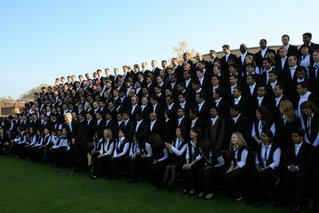


And this our common roon (canteen)... looks so nice, isn't it? Well, hot water costs 20 pence here.

And this is how our classes look... did I tell you? each class is 3.5 hours long!!! (god mercied on us with a 20 min break in-between)

Sunday, November 05, 2006
FTSE and JW linked
Here is the funniest academic story you would have ever heard. The MBA Decision science class is tutored by Prof. James Taylor. He is one of the funniest, yet clever and knowledgeable, professors I have ever seen.
This past week he taught about multiple regression (don’t worry about the term) and he wet to explain his work in trying to define a relation between FTSE and JW. FTSE is the financial share index. The equation was something like FTSE100t = 7039.60 – 210.89JWt + et
He seemed to be so proud of his statistical analysis and derivation. We went onto to validate the analysis (there are some set parameters like t-stat, r square, etc). Everything seemed to be just great and the whole class was kind of appreciating his efforts.
He slowly turned back and asked the class, “Why didn’t anyone ask me what is JW? Let me how you what JW is made of. He then switched on the other display which showed both his kids on the sofa. JW is apparently Jake’s Weight – they have been weighing his son’s weight every month and he was trying to correlate Jake’s Weight and FTSE index.
We laughed at being fooled so easily. The moral of he story: Be careful when you try to correlate two “trendy” variables. He sure is genius, isn’t he?
This past week he taught about multiple regression (don’t worry about the term) and he wet to explain his work in trying to define a relation between FTSE and JW. FTSE is the financial share index. The equation was something like FTSE100t = 7039.60 – 210.89JWt + et
He seemed to be so proud of his statistical analysis and derivation. We went onto to validate the analysis (there are some set parameters like t-stat, r square, etc). Everything seemed to be just great and the whole class was kind of appreciating his efforts.
He slowly turned back and asked the class, “Why didn’t anyone ask me what is JW? Let me how you what JW is made of. He then switched on the other display which showed both his kids on the sofa. JW is apparently Jake’s Weight – they have been weighing his son’s weight every month and he was trying to correlate Jake’s Weight and FTSE index.
We laughed at being fooled so easily. The moral of he story: Be careful when you try to correlate two “trendy” variables. He sure is genius, isn’t he?
Friday, November 03, 2006
Bhagavat gita in Management
Karma Capitalism from Business Week
Wonderful article. The article was so close to me, since I was an ardent follower of Bhagavat Gita, have heard greatly abt half the Management gurus listed in this article... and can relate to these US companies and India n culture. Question to ponder: Is old returning back?
Wonderful article. The article was so close to me, since I was an ardent follower of Bhagavat Gita, have heard greatly abt half the Management gurus listed in this article... and can relate to these US companies and India n culture. Question to ponder: Is old returning back?
Tuesday, October 31, 2006
CEO fo Amgen, Founder of Apple, and Managing Director at McKinsey
How would you feel if you met all these folks, shook hands with them and asked them podernign questions on future?
Well, this is what Oxford can do. Prepare the 27-year (alas, I turned 28 last week!) old non-so-popoular figures and make them meet with industry figures you cannot even imagine.
CEO of Amgen:
http://www.amgen.com/about/leadership_team.html
Mr. Kevin Sharer, Chairman & Chief Executive Officer, Amgen, Inc. visited Said Business School on for the introduction speech. Amidst the crowd of 300, I stood up and asked, "Do you really use any MBA tools and techniques in your day-to-day life? What is your advise on how we treat this academia?". He laughed, looked at the new Dean, smiled again and said, "The best thing that your MBA does to you is to shape YOU. You guys really do not know how important it is to get an MBA from Oxford. You sure are gifted. If you walk upto my company's door and introduce yourself as an Oxford graduate, we are gonna hear you just for that".
Founder of Apple:
http://www.woz.org/
Steve Wozniak, the co-founder of Apple (Yeah, the same apple from Forest Gump) visited Oxford a couple of weeks back to promote his new book. He seemed too technical (Steve Jobs apparently was the business mind behind Apple?), a born-genius kind. The speech was very motivational and informative. Apparently, he is very proud of his accomplishments.
Managing Director and McKinsey
http://www.mckinsey.com/ideas/wef2005/biographies/dominiccasserley.asp
Dominic Casserley, head of McKinsey in the UK, Ireland and the Middle East, talked on "What will the Global Company look like in 2020". The corwd was a selected (yeah, me included!) 40 folks. 20 of them (Yeah, yeah, me included) were selected again to go further for a formal dinner with him. To be honest, I did not realize his power (greatness?) until I came back to home that night and looked up the internet! hmmm.. I need to keep on top of events - so some research before the event. Why leave an oppurtunity for question - I asked him his opinion on India and China becoming the newer markets in 2020. He mentioned the developing countries are posing a threat, but will nto replace US/EU. "What is your opinion on consolidation? WOuld we be left with 4 big companies in each sector by 2020?". He answered, "No. As companies merge and acquire, there will be more players entering the market."
Obviously these answers were not exact to the word. My understanding and language are mixed in the above text.
Go Oxford!!!
Well, this is what Oxford can do. Prepare the 27-year (alas, I turned 28 last week!) old non-so-popoular figures and make them meet with industry figures you cannot even imagine.
CEO of Amgen:
http://www.amgen.com/about/leadership_team.html
Mr. Kevin Sharer, Chairman & Chief Executive Officer, Amgen, Inc. visited Said Business School on for the introduction speech. Amidst the crowd of 300, I stood up and asked, "Do you really use any MBA tools and techniques in your day-to-day life? What is your advise on how we treat this academia?". He laughed, looked at the new Dean, smiled again and said, "The best thing that your MBA does to you is to shape YOU. You guys really do not know how important it is to get an MBA from Oxford. You sure are gifted. If you walk upto my company's door and introduce yourself as an Oxford graduate, we are gonna hear you just for that".
Founder of Apple:
http://www.woz.org/
Steve Wozniak, the co-founder of Apple (Yeah, the same apple from Forest Gump) visited Oxford a couple of weeks back to promote his new book. He seemed too technical (Steve Jobs apparently was the business mind behind Apple?), a born-genius kind. The speech was very motivational and informative. Apparently, he is very proud of his accomplishments.
Managing Director and McKinsey
http://www.mckinsey.com/ideas/wef2005/biographies/dominiccasserley.asp
Dominic Casserley, head of McKinsey in the UK, Ireland and the Middle East, talked on "What will the Global Company look like in 2020". The corwd was a selected (yeah, me included!) 40 folks. 20 of them (Yeah, yeah, me included) were selected again to go further for a formal dinner with him. To be honest, I did not realize his power (greatness?) until I came back to home that night and looked up the internet! hmmm.. I need to keep on top of events - so some research before the event. Why leave an oppurtunity for question - I asked him his opinion on India and China becoming the newer markets in 2020. He mentioned the developing countries are posing a threat, but will nto replace US/EU. "What is your opinion on consolidation? WOuld we be left with 4 big companies in each sector by 2020?". He answered, "No. As companies merge and acquire, there will be more players entering the market."
Obviously these answers were not exact to the word. My understanding and language are mixed in the above text.
Go Oxford!!!
The best motivational speech ever
Al Pacino's Inch By Inch speech from "Any Given Sunday "
Are you a lecturer of organizational behaviour at any business school and need to show video at your class (like they do in SBS!)? Are you a corporate manager needing to bring in motivation team? Well, I present to you the great Al Pacino
Here is the transcript of the greatest motivational speech ever:
"I don't know what to say really. Three minutes to the biggest battle of our professional lives all comes down to today. Either we heal as a team or we are going to crumble. Inch by inch. Play by play, till we're finished.We are in hell right now, gentlemen. Believe me and we can stay here and get the shit kicked out of us or we can fight our way back into the light. We can climb out of hell. One inch, at a time.
Now I can't do it for you. I'm too old. I look around and I see these young faces and I think I mean I made every wrong choice a middle age man could make. I uh.... I pissed away all my money. Believe it or not. I chased off anyone who has ever loved me. And lately, I can't even stand the face I see in the mirror. You know when you get old in life things get taken from you. That's, that's part of life. But, you only learn that when you start losing stuff. You find out that life is just a game of inches. So is football. Because in either game life or football the margin for error is so small. I mean one half step too late or to early you don't quite make it. One half second too slow or too fast and you don't quite catch it. The inches we need are everywhere around us. They are in ever break of the game every minute, every second.
On this team, we fight for that inch. On this team, we tear ourselves, and everyone around us to pieces for that inch. We CLAW with our finger nails for that inch. Cause we know when we add up all those inches that's going to make the fucking difference; between WINNING and LOSING; between LIVING and DYING. I'll tell you this in any fight it is the guy who is willing to die who is going to win that inch. And I know if I am going to have any life anymore it is because, I am still willing to fight, and die for that inch because that is what LIVING is. The six inches in front of your face.
Now I can't make you do it. You gotta look at the guy next to you. Look into his eyes. Now I think you are going to see a guy who will go that inch with you. You are going to see a guy who will sacrifice himself for this team because he knows when it comes down to it, you are gonna do the same thing for him. That's a team, gentlemen and either we heal now, as a team, or we will die as individuals. That's football guys. That's all it is. Now, whattaya gonna do? "
Dont tell me you dont love him even now. Al Pacino is THE actor.
Are you a lecturer of organizational behaviour at any business school and need to show video at your class (like they do in SBS!)? Are you a corporate manager needing to bring in motivation team? Well, I present to you the great Al Pacino
Here is the transcript of the greatest motivational speech ever:
"I don't know what to say really. Three minutes to the biggest battle of our professional lives all comes down to today. Either we heal as a team or we are going to crumble. Inch by inch. Play by play, till we're finished.We are in hell right now, gentlemen. Believe me and we can stay here and get the shit kicked out of us or we can fight our way back into the light. We can climb out of hell. One inch, at a time.
Now I can't do it for you. I'm too old. I look around and I see these young faces and I think I mean I made every wrong choice a middle age man could make. I uh.... I pissed away all my money. Believe it or not. I chased off anyone who has ever loved me. And lately, I can't even stand the face I see in the mirror. You know when you get old in life things get taken from you. That's, that's part of life. But, you only learn that when you start losing stuff. You find out that life is just a game of inches. So is football. Because in either game life or football the margin for error is so small. I mean one half step too late or to early you don't quite make it. One half second too slow or too fast and you don't quite catch it. The inches we need are everywhere around us. They are in ever break of the game every minute, every second.
On this team, we fight for that inch. On this team, we tear ourselves, and everyone around us to pieces for that inch. We CLAW with our finger nails for that inch. Cause we know when we add up all those inches that's going to make the fucking difference; between WINNING and LOSING; between LIVING and DYING. I'll tell you this in any fight it is the guy who is willing to die who is going to win that inch. And I know if I am going to have any life anymore it is because, I am still willing to fight, and die for that inch because that is what LIVING is. The six inches in front of your face.
Now I can't make you do it. You gotta look at the guy next to you. Look into his eyes. Now I think you are going to see a guy who will go that inch with you. You are going to see a guy who will sacrifice himself for this team because he knows when it comes down to it, you are gonna do the same thing for him. That's a team, gentlemen and either we heal now, as a team, or we will die as individuals. That's football guys. That's all it is. Now, whattaya gonna do? "
Dont tell me you dont love him even now. Al Pacino is THE actor.
Saturday, October 14, 2006
Oxford Matriculation
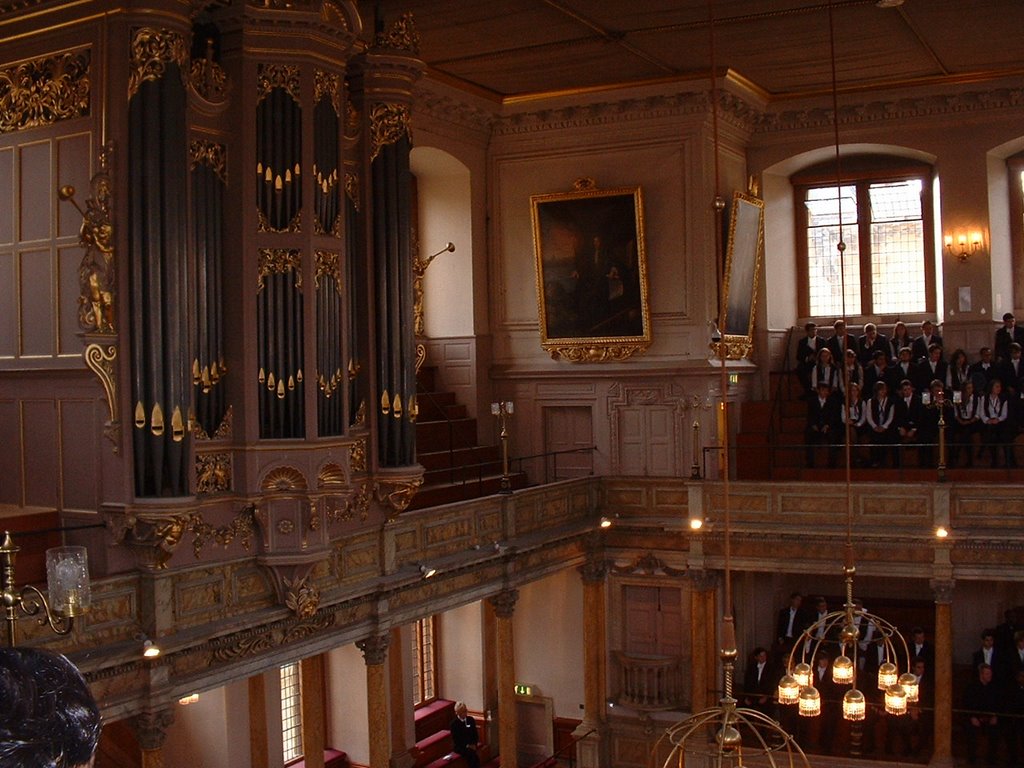 We had our matriculation today at Sheldonian theatre. The theatre was awesome old building with huge paintings, chandeliers, and church like setting.
We wore Suit, Sub fusc (kind of gown) and Mortar board (a funky graduation cap).
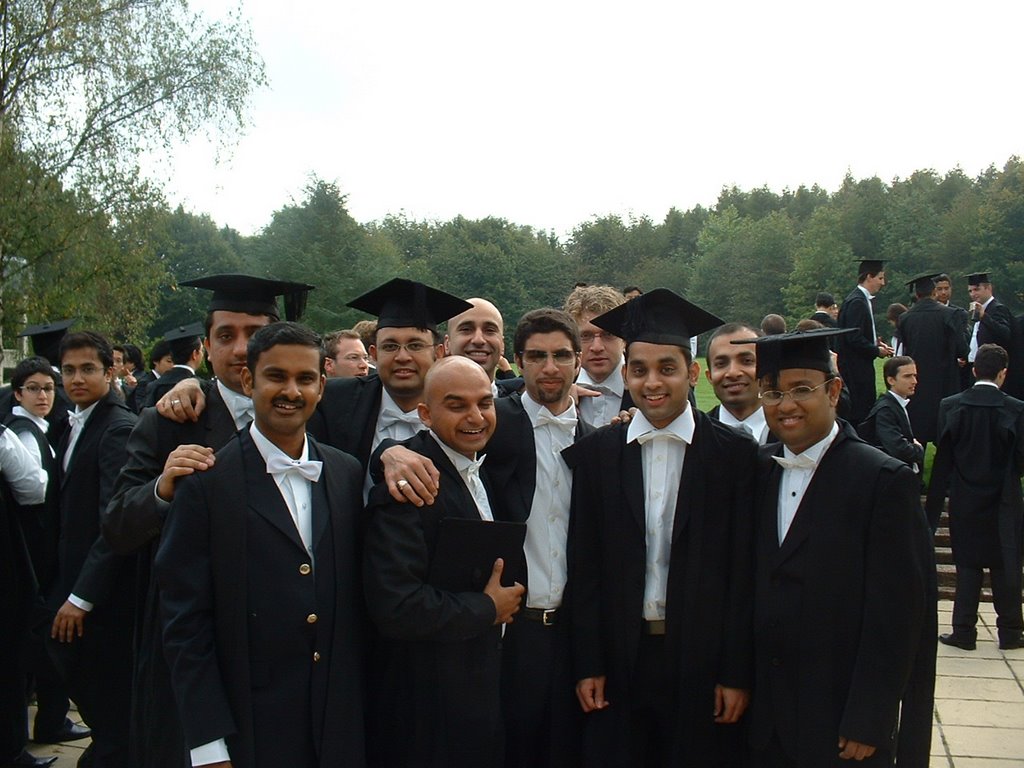
It kind of felt funky with this whole matriculation thing. I personally felt it was a total waste of time (day?). The University chancelor (or someone important!) read out a few words in Latin which officially enrolled us as an Oxonian!!
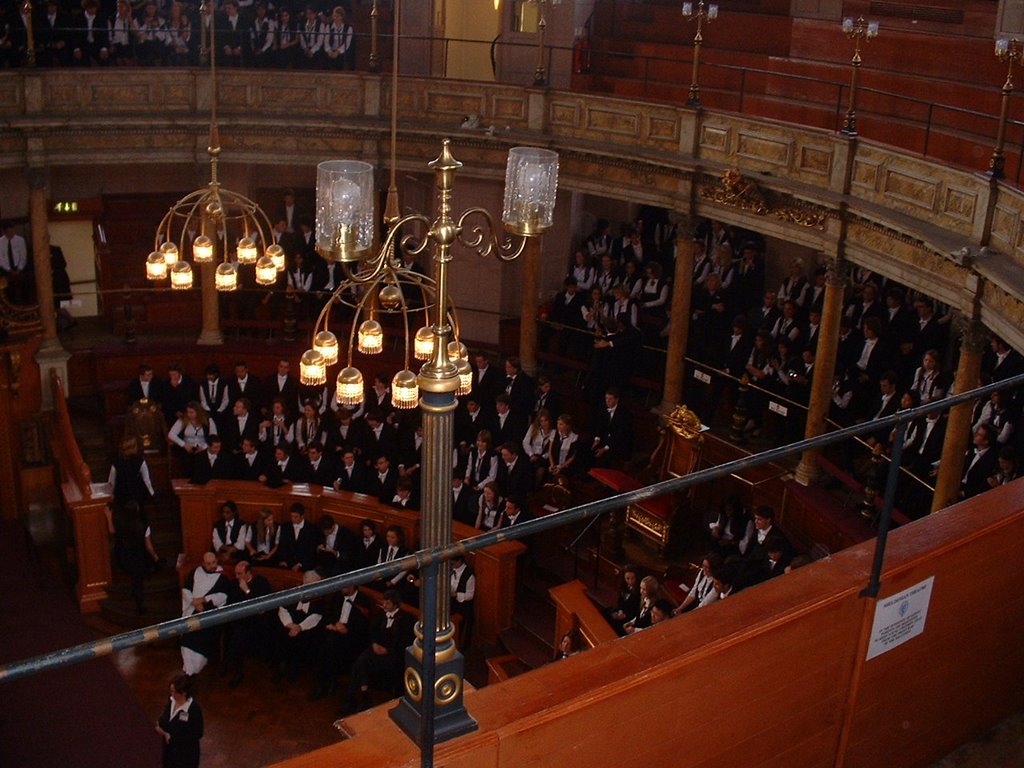
We will be wearing this sub fusc to the exams (Yes, all exams! I cannot believe!!). And a similar ceremony will occur when we graduate - in Sep 2007. Well, I hope to get there successfully!
Wednesday, October 04, 2006
Reached Oxford..
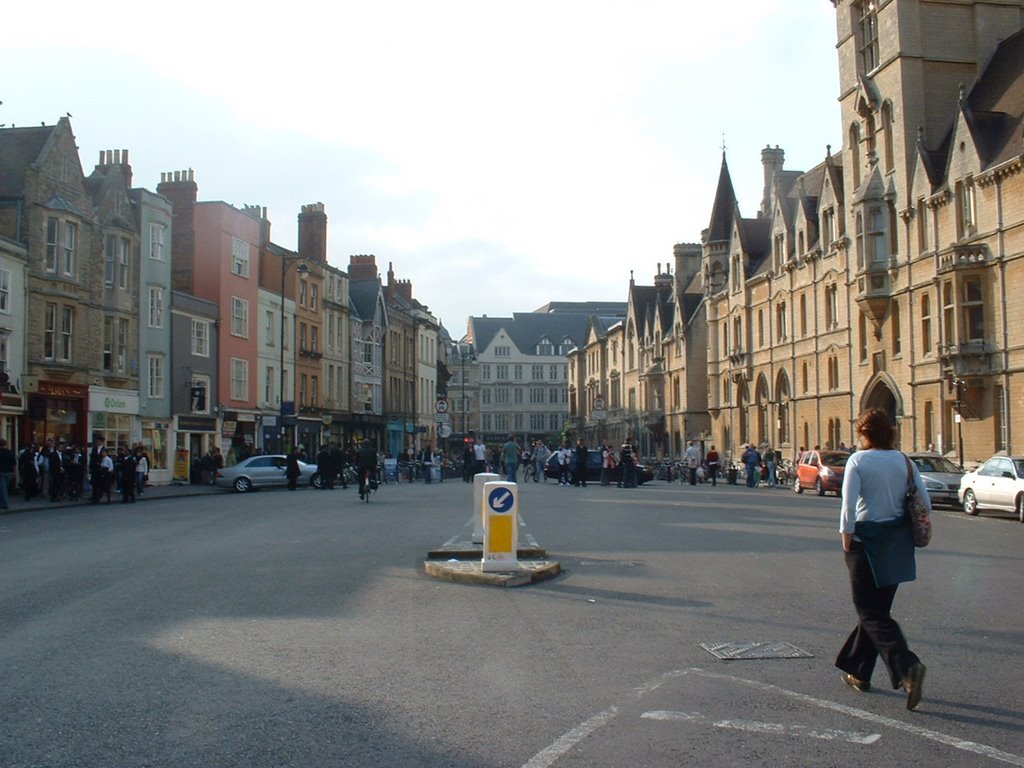
I have reached Oxford!
The journey from India to Oxford was comfortable - though British Airways tried its ways to make a petty cash from my extra luggage, by deciding to call of the 'two hand luggage' scheme, unannounced, in the last minute to comply with 'strict guidelines' that help them monitor terrorist activity. I dunno how reducing a luggage would help them in this process, but hey, I got along!
 Reached Oxford and kinda felt at home. Its a mix of Chennai and LA. Chennai - in all the practices and customs (left hand drive); LA in the cleanliness and etiquette (greener pavenments than LA).
I am currently staying in Wellington Square. It is a cheap University accomodation that is in the center of the town. Business School is a just 3 minutes ride away.
I settled in quickly and managed to buy a bike from a local private guy who was noce enough to throw in his lock as well. A new bike costs around 120 pounds and my used bike cost me 49 pounds.
 Well this week (Oct 2) is all about induction - sitting thru some boring (or would this be useful later?) lectures and tons of introductions - Computer center, Library, Career services, reception included!! :)
Well, ciao, we have got to a long to-do list to go through..
Friday, April 28, 2006
Reservation policy in India
There is quite a few protests in India against the reservation policy.
http://us.rediff.com/news/quota06.html
I don't blindly support or oppose this reservation based on caste. Rather I would call for people to use it judiciously; Or the reservation could be revised to be based on family financial situation.
The reservation policy was aimed at the upbringing of backward people who did not have the means to venture out colleges and studies that were only known and accessible to higher caste (I am talking probably 1960s). Since then the backward people have considerably utilized this reservation policy and improved their status. The guys are now probably higher government officials, doctors or lawyers. I only oppose the kids of these guys to (mis)use this reservation policy. They should honestly not specify themselves as backward or tribe in the forms - because they are not. On the other hand, for a guy from mountain village - Obviously Yes.
Let me give an example. I knew a school mate who was the richest kid, nephew of the local MP, comes to school in car, and belonged to MBC category. Then there was also this lady who was a cleaner in our school, whose son was also sponsored to study with us, and belonged to OC. Ideally, the latter should be able to use the reservation policy and not the former.
But, hey, there is no such positive thinking in the impulsive Politics. There is an election to be won, pride to be maintained and money to be made; politicians will do any gimmicks to get the vote - allow reservation, give television, free rice, chips and DVDs, free clothes, money -- rice will even come to home, one says. Actually, they don't really want you to work. Their ideal Utopian world does not include an Indian making international business; it envisions an Indian wearing the free dhoti, eating free rice, that came free to his home and watching the free tv, in his freely build home - he just has to manage enough money for the almost free liquor.
http://us.rediff.com/news/quota06.html
I don't blindly support or oppose this reservation based on caste. Rather I would call for people to use it judiciously; Or the reservation could be revised to be based on family financial situation.
The reservation policy was aimed at the upbringing of backward people who did not have the means to venture out colleges and studies that were only known and accessible to higher caste (I am talking probably 1960s). Since then the backward people have considerably utilized this reservation policy and improved their status. The guys are now probably higher government officials, doctors or lawyers. I only oppose the kids of these guys to (mis)use this reservation policy. They should honestly not specify themselves as backward or tribe in the forms - because they are not. On the other hand, for a guy from mountain village - Obviously Yes.
Let me give an example. I knew a school mate who was the richest kid, nephew of the local MP, comes to school in car, and belonged to MBC category. Then there was also this lady who was a cleaner in our school, whose son was also sponsored to study with us, and belonged to OC. Ideally, the latter should be able to use the reservation policy and not the former.
But, hey, there is no such positive thinking in the impulsive Politics. There is an election to be won, pride to be maintained and money to be made; politicians will do any gimmicks to get the vote - allow reservation, give television, free rice, chips and DVDs, free clothes, money -- rice will even come to home, one says. Actually, they don't really want you to work. Their ideal Utopian world does not include an Indian making international business; it envisions an Indian wearing the free dhoti, eating free rice, that came free to his home and watching the free tv, in his freely build home - he just has to manage enough money for the almost free liquor.
Thursday, April 06, 2006
De Niro vs Al Pacino
What kind of films do I like? Comedy; more than Comedy I like underworld/thugs kind of movies. The list goes - God father 1 & 3, The untouchables, Scarface, Good fellas, Casino, Donnie Brasco, Heat, Taxi Driver, etc. Seems I feel great
Did you notice the commonality? Knowingly or unknowingly I have followed movies of Al Pacino and Robert De Niro. Whom would I rate more - Al Pacino or De Niro? Quite a dilemma.
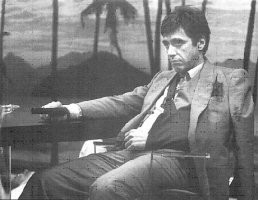 Al Pacino was great for his God father role. He was a cold hearted silent killer. And who could forget Scarface - his black and white pictures sold like crazy. And in Donnie Brasco, he underplayed well. He played the best blind man in Scent of a Woman. Oflate, I saw his latest movie 'Simone'. That is when he went down ten to 4 in my acting scale. I felt he was overacting and too loud; I was not convinced Simone is an apt movie he should even choose to act.
[Here is a clip from Any given sunday - an inspirational speech http://www.youtube.com/watch?v=JWoPEU3RwPw)
 On the other hand, De Niro, was a great actor right from taxi Driver. The top angle scene in Untouchables, where he hits a spy with base ball bat. It will stay in memory for a few years. Casino and Good Fellas only made him the best conman ever. Taxi Driver and Raging bull adds the much lacked variety. He was kinda average all along. But when I saw Analyze this and Anlayze that - two movies where he played gangster with a touch of comedy - he went upp rising in the chart. De Niro is my only star.
Verdict: If I had to pick one great actor, it would be De Niro.
Did you notice the commonality? Knowingly or unknowingly I have followed movies of Al Pacino and Robert De Niro. Whom would I rate more - Al Pacino or De Niro? Quite a dilemma.

 Al Pacino was great for his God father role. He was a cold hearted silent killer. And who could forget Scarface - his black and white pictures sold like crazy. And in Donnie Brasco, he underplayed well. He played the best blind man in Scent of a Woman. Oflate, I saw his latest movie 'Simone'. That is when he went down ten to 4 in my acting scale. I felt he was overacting and too loud; I was not convinced Simone is an apt movie he should even choose to act.
[Here is a clip from Any given sunday - an inspirational speech http://www.youtube.com/watch?v=JWoPEU3RwPw)
 On the other hand, De Niro, was a great actor right from taxi Driver. The top angle scene in Untouchables, where he hits a spy with base ball bat. It will stay in memory for a few years. Casino and Good Fellas only made him the best conman ever. Taxi Driver and Raging bull adds the much lacked variety. He was kinda average all along. But when I saw Analyze this and Anlayze that - two movies where he played gangster with a touch of comedy - he went upp rising in the chart. De Niro is my only star.
Verdict: If I had to pick one great actor, it would be De Niro.
Subscribe to:
Posts (Atom)